
Heavy Use of Tomahawk Missiles Raises Questions About Supply and Cost

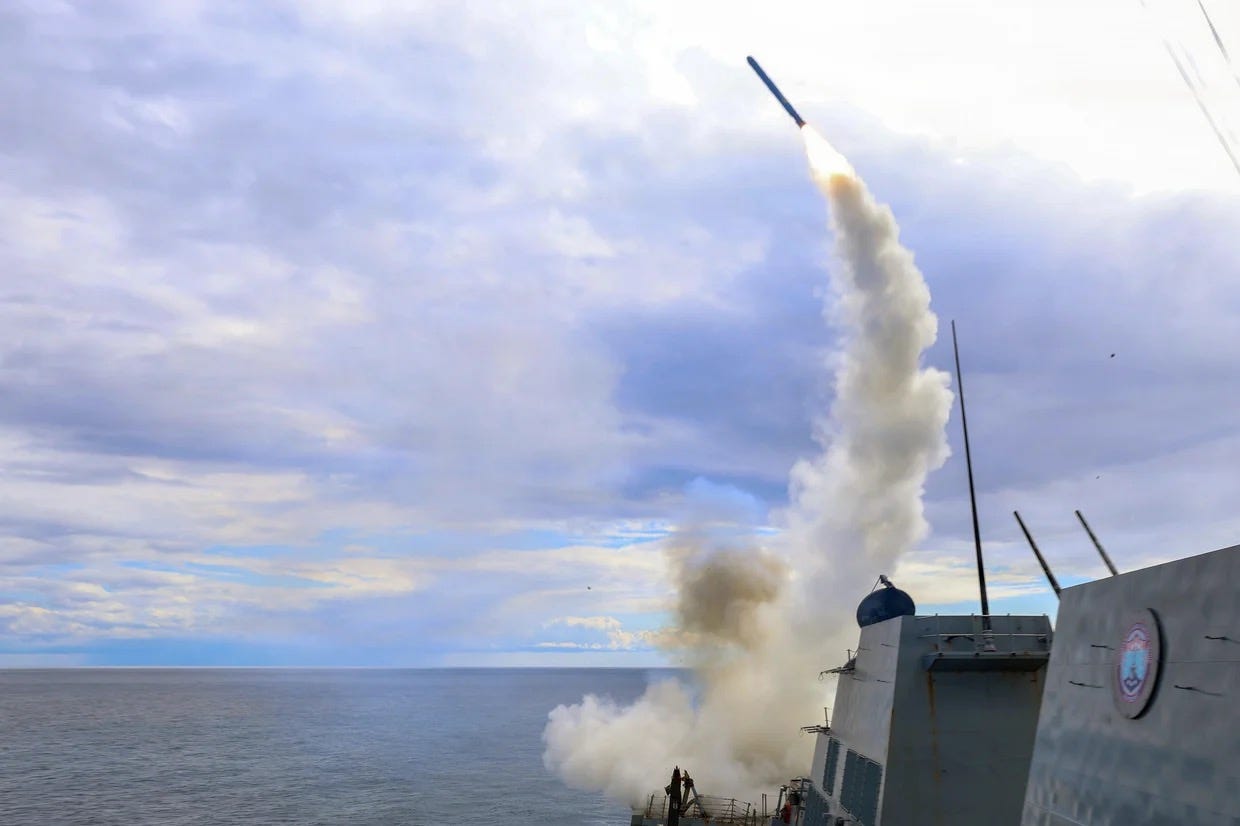
The U.S. military has fired hundreds of Tomahawk cruise missiles during the war with Iran, raising concerns among some officials about stockpile levels and the long-term sustainability of high-cost precision weapons.
More than 850 Tomahawk missiles have been launched by U.S. forces in roughly four weeks of fighting, according to Washington Post (Lean Left bias). The pace of use is significantly higher than typical annual procurement levels. However, media reports pointed to some White House and Pentagon officials saying the military still has sufficient resources to meet operational goals.
Below are the different outlet reports on the story.
Media Coverage Comparison
From the Left
CBS News: U.S. Tomahawks are being used in Iran war faster than stockpile is being refilled
Link to story: https://www.cbsnews.com/news/u-s-tomahawks-iran-war-faster-than-stockpile-refilled/
From the Center
Reuters: US uses hundreds of Tomahawk missiles on Iran, alarming some at Pentagon, WaPo reports
From the right
Fox News digital: Over 90% of Iranian missiles intercepted, but a critical vulnerability is growing, report warns
Link to story: https://www.foxnews.com/world/more-than-90-iranian-missiles-intercepted-dangerous-imbalance-emerging
PrismwireNews Observations
This story isn’t just about missiles it’s about how modern warfare is running into real world limits.
The U.S. has fired over 850 Tomahawk missiles in just a few weeks, and that alone is raising alarms. Each one costs millions, and more importantly, they can’t be replaced quickly production takes time, and current output isn’t keeping up.
That’s where the narrative splits.
On one side, this is framed as:
The U.S. using its most advanced weapons to maintain dominance
A sign of overwhelming military capability and precision
But another angle flips it completely:
The U.S. is burning through high end weapons faster than it can replace them
This raises concerns not just about this war but about readiness for future conflicts
And that’s the key tension.
This isn’t just about strength it’s about sustainability.
When expensive, limited weapons are used at this scale, it creates a situation where:
Winning battles in the short term
Might weaken long-term strategic position
It gets even more interesting when you compare it to the opponent:
Cheaper weapons (like drones) are being used to drain expensive systems
Meaning cost itself becomes part of the strategy
So the real story isn’t just “missiles being used” it’s that modern war is exposing a gap between military power and industrial capacity